Digital printing is a modern printing process. It involves the process in which digital files are directly transferred to a surface without the use of plates.
It is one of the fastest-growing printing technologies as accounting for over 20% of the global print market. With years its share continues to expand as businesses demand more customized and cost-effective solutions. Here, we will cover all aspects of digital printing.
What is Meant by Digital Printing?
Digital printing simply means producing printed materials directly from a computer file. The digital process prints directly onto paper, fabric, plastic or other materials.
| Feature | Digital Printing |
| Setup Time | Minimal |
| Cost per Unit (Small Run) | Low |
| Cost per Unit (Large Run) | High |
| Personalization | Easy |
| Turnaround Time | Fast |
| Best For | Short runs and customization |
Digital printing relies on advanced digital machines that translate digital images directly onto various materials. These advancements eliminate the need for traditional printing plates and enable faster production.
Digital Printing Machine Makes the Process Smoother
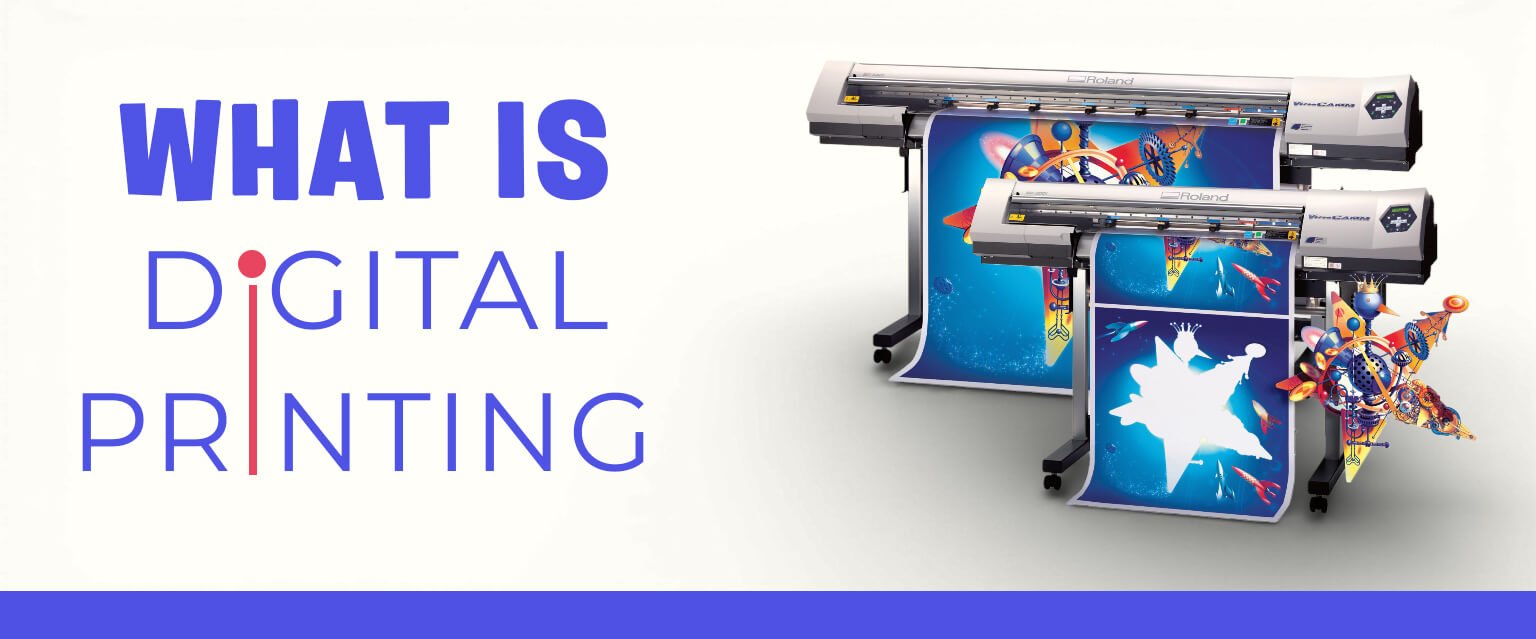
A digital printing machine is the equipment that carries out this process. These machines range from small-scale desktop printers to large industrial presses. After that these machines use inkjet or laser technology to print directly from digital files.
What makes these machines unique is their ability to adjust to different file formats. This was an issue in the past for many workers who had to handle it manually. Now this has been solved allowing the machines to manage both small and large projects with ease. These machines are assembled by a team, and once set up, the printing process begins.
How Digital Printing Works? All the Processes in Detail
The process of digital printing begins with a simple digital file. It comes in formats like PDF, TIFF, or JPEG. This file is sent to a printer that translates the data into a print-ready format. After that the machine then deposits ink or toner directly onto the chosen substrate in exact detail.
What’s good is that there are no setup plates involved and any adjustments can be made instantly. After all steps are done the print is then dried either by heat, light or natural evaporation. Drying ink is necessary to get the desired results.
Digital Printing Inks Play a Role in the Overall Work
As mentioned above, one important element necessary to run a digital print is the ink. The inks used in digital printing are different from those used in offset or screen printing.
There are several types that follow sustainable goals as well. The first one is dye-based inks that offer bright colors. Another option is pigment-based inks that are known for durability. Another option is solvent inks for flexible materials like vinyl. Each type of ink differentiates the types of digital printing techniques.
Types of Digital Printing That You Must Know Before
All the above-discussed inks are then employed in various techniques. Digital printing comes in several techniques such as:
- Inkjet printing involves the spraying of liquid ink directly onto surfaces with high accuracy.
- Laser printing uses toner and heat to produce sharp text and images. These are often used for documents and professional materials.
- Dye-sublimation printing is used for fabrics and photo-quality products where heat transfers dye onto materials.
These types highlight the versatility of digital printing in serving multiple industries and businesses.
Digital Printing for Free Business Promotions
The uses of digital printing are almost endless. Businesses rely on it for marketing in the form of posters, flyers, catalogs and business cards. With the increasing demand, e-commerce companies use it for personalized packaging and product labels.
Event planners use it for invitations, banners and backdrops. It is also heavily used in the fashion and décor industries for custom textiles, wall graphics and branded merchandise. Because of its flexibility digital printing caters to both commercial market needs and personal creative projects.
Digital Print Media and Products Available in the Market
Digital printing is not limited to paper alone. Examples of digital printing surround us in everyday life.
- Business cards
- Personalized t-shirts
- Photo albums
- Product packaging
- Large advertising banners
- Custom stickers
- Promotional mugs
- Decorative wallpapers
- Phone cases
- Branded shopping bags
But for better accuracy in custom packaging with digital printing you should get connected with one of the best packaging suppliers in the USA.
What are Digital Printing and Offset Printing?
Offset printing is the traditional method where ink is transferred from a plate to a rubber blanket and then onto paper. It works best for very large runs because the setup costs are high, but the per-unit cost decreases as quantities increase.
Digital printing simply does not require plates. It prints directly from a file which makes it faster & cheaper for smaller quantities. Plus it gives more flexibility for customization. There are many examples of digital data that are seen in many ways.
Pros and Cons of Digital Printing for All Items
There are certain pros and cons of digital printing discussed below:
| Pros | Cons |
| Fast turnaround time | Higher cost per unit for large print runs |
| Low setup cost (no plates or screens needed) | Color consistency can vary over very large volumes |
| Great for small batches and one-off prints | Limited access to specialty inks and finishes |
| High flexibility and easy customization (personalized printing) | May not match offset quality for some niche applications |
| High-quality output with sharp details and vibrant colors | Limited substrate compatibility in some cases |
How Digital Printing Differs from Normal Printing?
“Normal” printing generally refers to traditional processes like offset, flexography, or screen printing. These rely on plates, screens or mechanical transfers.
Digital printing skips the setup process and goes straight from file to material. This makes it faster and more efficient for small batches.
Conclusion
Digital printing combines speed and quality at the same time. As technology advances further, digital printing is only expected to grow because it effectively ensures that creativity and efficiency go hand in hand in the future of print.