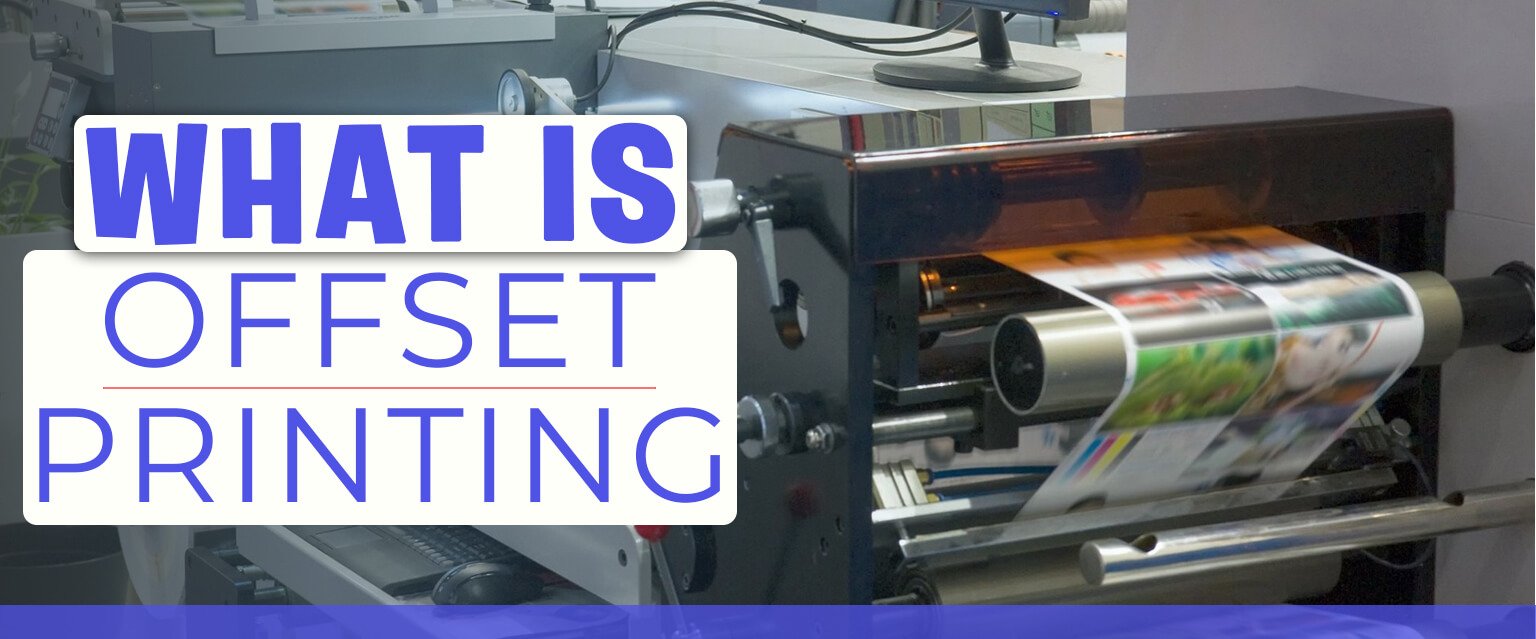
Offset printing involves the transferring of inked images from a plate to a rubber blanket and then onto the printing surface. This indirect method is also known as offset lithography.
Offset printing works differently and gets its origins from lithography a printing process that originated in 1796 as a cost-effective method of printing theatrical works. While offset printing or modern lithography has evolved significantly since the 18th century.
Businesses, publishers, and packaging companies often prefer offset printing because it combines speed, efficiency, and exceptional print quality, especially for high-volume jobs.
What are the Process and Steps of Offset Printing?
Offset printing is sometimes called lithography. It is a process based on the principle that water and oil do not mix. The process begins with the image area on a plate that attracts ink. While the non-image area attracts a water-based solution that repels ink.
This ensures that only the intended areas receive ink during printing. The design or text is first etched onto a metal plate and then transferred to a rubber blanket. After that it was finally pressed onto paper or another substrate.
The result is sharp and consistent for professional-quality prints. Also all these are done with just the help of offset machines.
Role of Offset Printing Machine and Press in the Procedure of Offset Printing
An offset printing machine that is commonly known as an offset printing press. It contains the plate cylinders that carry the images throughout the process. Then there are the blanket cylinders that transfer the images and the impression cylinders that press the paper to complete the print.
Modern offset printing presses are highly advanced and capable of printing thousands of sheets per hour. They can handle both single-color and multi-color jobs with the help of many process variations that offset printing may offer.
Process Variations in Offset Printing That You Must Know
Like many technologies, offset printing has evolved, resulting in different variations to suit specific needs.
One variation is the blanket-to-blanket method. In this system simply the two blanket cylinders print on both sides of a sheet simultaneously. The sheet passes between the cylinders and each side gets printed in one pass. This makes the process faster and more efficient especially for printing items like envelopes or duplex documents.
Another variation is the blanket-to-steel process where precise pressure between the plate and blanket cylinder ensures accurate printing. Although considered a one-color press this method is often used for direct mail advertising and business forms.
Variable-size printing is another adaptation that allows presses to handle one-sided or two-sided jobs by using removable inserts. Keyless offset is a process where fresh ink is applied for each revolution preventing buildup and maintaining clean prints. It is particularly suitable for fast-moving newspaper production.
Dry offset printing is a slightly different process that combines relief plates with the offset method. Instead of applying ink directly, it transfers ink from a plate to a blanket and then to the substrate. It is often used for printing on plastic containers like tubs, buckets, and cups.
But after all the procedures certain key features of offset printing make it an ideal choice for all.
Key Characteristics of Offset Printing for Various Products
There are certain characteristics and benefits that you can get after getting offset printing. Below is the table with relevant examples of offset printing.
| Features | Description |
| Consistency | Produces sharp images and text even in large volumes. |
| Adaptability | Works with various paper types, surfaces and finishes. |
| Cost-Effectiveness | Lower cost per copy with higher print quantities is ideal for large print runs. |
| Versatility | Suitable for a wide range of products like newspapers, magazines, packaging, and promotional materials. |
Offset printing is suitable for a wide range of printed items but certain types of offset printing are better suited for specific products.
Types of Offset Printing Suitable for Different Products
Two main types of offset printing are suitable for certain products. Such as:
- Wet offset lithography uses a combination of ink and dampening solutions. It ensures proper ink transfer and protection of non-image areas.
- Waterless offset lithography was introduced in the 1960s. It replaces dampening solutions with a silicone-coated plate that repels ink in non-image areas. This results in sharper prints and less water waste. As a result it is often chosen for its eco-friendly benefits.
Beyond this the offset printing is also categorized by the way paper is fed into the press. These are:
- Sheet-fed offset that uses individual sheets of paper for shorter runs. It is ideal for packaging, brochures and stationery.
- Web offset uses continuous rolls of paper fed into high-speed presses. This method is faster and cost-effective for very large print runs such as newspapers, books, and magazines.
Within web offset, there are further distinctions based on how inks are dried:
- Coldset offset relies on ink absorption into paper. It is commonly used for newspapers and directories where glossy finishes are not needed.
- Heatset lithography uses heat and forced air to dry inks. It is commonly used for catalogs and more.
- UV offset printing uses ultraviolet light to cure inks instantly. It allows printing on non-porous materials such as plastic and metal.
As we have discussed all types and their subcategories the inks used play an important role in the process.
Inks Used in Offset Printing for Effective Results
Inks play a central role in the effectiveness of offset printing.
- Letterpress inks are designed for presses without dampening systems and work with raised-image plates.
- Waterless inks are heat-resistant and formulated to work with silicone-based plates used in waterless lithography.
- Single-fluid inks are newer innovations that combine ink and dampening functions in one, reducing the need for additional dampening systems.
Each type of ink is chosen based on the press design and the type of material being printed on.
Advantages and Disadvantages of Offset Printing
Offset printing has several advantages and disadvantages that you should be aware of.
| Advantages | Disadvantages |
| Produces consistent, sharp images and text across large volumes. | More expensive and time-consuming to set up compared to digital printing. |
| Supports a wide range of paper types, surfaces, and finishes. | Less economical for small quantities or one-off prints. |
| Lower cost per unit as setup costs are spread over many copies. | Requires more space and regular maintenance due to the size and complexity of the presses. |
| Once set up, the printing process is quick and ideal for meeting deadlines. |
Many people get confused when choosing offset printing for their work often comparing it to digital printing. However digital printing is a completely different process with its own advantages and limitations.
What’s the Difference Between Offset and Digital Printing?
The main difference lies in how the image is transferred. Offset printing uses plates and blankets, making it ideal for bulk production. But the digital printing directly transfers the image from a file to the paper.
Digital is better for short runs and personalized jobs, while offset shines in terms of cost and quality for high volumes. Businesses often choose between the two depending on order size and quality needs.
Difference Between CMYK Printing and Offset Printing to Clear the Query
CMYK refers to the four-color process of using cyan, magenta, yellow, and black inks to create full-color images. Offset printing is the process itself, and CMYK is often the color model used within offset printing.
Is Offset Printing Good Quality?
Yes offset printing is still considered one of the highest-quality methods available. The indirect transfer of ink allows for smooth gradients, rich colors, and sharp details. It handles both text and images exceptionally well.
Conclusion
Offset printing remains a cornerstone of the printing industry despite the rise of digital methods. Businesses still trust it not just for tradition but because it delivers where it matters most the quality, consistency, and efficiency.